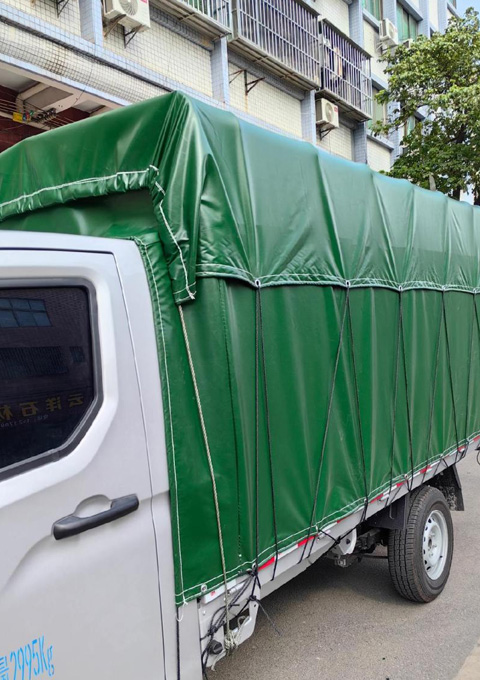


Choosing the right truck cover involves more than finding a waterproof material. A good PVC coated truck tarpaulin needs to provide sufficient strength, manageable weight, and enough flexibility for regular installation, removal, and handling. These properties work together to determine how well a truck cover performs during daily transportation.
For fleet operators, truck cover manufacturers, and bulk buyers, understanding the relationship between fabric strength, weight, and flexibility can help avoid unsuitable material choices and improve purchasing decisions.
Why Fabric Strength Matters for Truck Tarpaulins
Truck tarpaulins are exposed to repeated pulling, folding, fastening, and movement during transportation. The fabric must withstand these conditions without tearing easily or losing its structural integrity.
The strength of a PVC coated truck cover fabric depends on several factors, including the base fabric, yarn construction, coating quality, and overall material thickness.
A strong base fabric provides support, while the PVC coating helps protect the fabric surface and contributes to waterproof performance. The combination of these layers determines the overall durability of the finished tarpaulin.
When evaluating heavy duty PVC truck tarpaulin, buyers should consider tensile strength and tear resistance rather than relying only on thickness. A thicker fabric does not automatically mean better performance if the base fabric and coating quality are inadequate.
For truck cover applications involving frequent handling or demanding transportation conditions, choosing a suitable fabric structure is particularly important.
How Does Tarpaulin Weight Affect Daily Use?
Fabric weight is another important consideration when selecting PVC tarpaulin for truck covering. It is commonly expressed in grams per square meter.
Heavier PVC coated tarpaulin generally uses more material per unit area, which can contribute to a more substantial fabric structure. However, additional weight also makes the cover harder to lift, fold, and position.
For large trucks, an excessively heavy cover may increase the workload during installation and removal. This matters especially when drivers or workers need to handle the truck cover frequently.
On the other hand, choosing a fabric that is too light may not provide the desired strength for the intended application.
The best choice depends on the truck size, covering area, handling frequency, and expected service conditions. Buyers should compare different PVC coated tarpaulin weight options and confirm whether the material meets their actual requirements.
Why Flexibility Is Important for Truck Covers
Flexibility affects how easily a truck tarpaulin can be installed, folded, stored, and adjusted around different cargo arrangements.
A flexible PVC truck cover is generally easier to handle during loading and unloading. It can also be more convenient when workers need to fold the material into a compact shape for storage.
However, flexibility should not come at the expense of strength. If the material is too soft or its construction is unsuitable, it may not withstand repeated pulling and fastening.
The coating formulation, base fabric construction, and material thickness all influence the flexibility of PVC coated fabric.
For manufacturers and buyers, the goal is to select a PVC coated truck cover material that remains manageable during daily operation while providing sufficient resistance to handling stress.
Finding the Right Balance Between Strength, Weight, and Flexibility
These three properties should be evaluated together instead of separately.
For example, a very heavy fabric may offer a robust structure but create handling difficulties. A lightweight material may be easier to use but may not provide enough strength for demanding applications. A highly flexible fabric may be convenient to fold, but its overall performance still depends on the quality of the base fabric and PVC coating.
Before ordering custom PVC truck tarpaulin, buyers should consider the following factors:
- Truck type and covering area: Larger covers may require careful consideration of total fabric weight.
- Cargo and transportation conditions: Different applications may require different levels of strength and flexibility.
- Handling frequency: Covers that are installed and removed regularly need to be practical to handle.
- Fabric specifications: Compare GSM, base fabric construction, coating quality, and mechanical properties.
- Finished product requirements: Consider dimensions, edge reinforcement, fastening arrangements, and finishing details.
Providing these details to a PVC tarpaulin manufacturer can make material selection and product customization more accurate.
What Should Buyers Check Before Purchasing PVC Truck Tarpaulin?
Before placing a bulk order, buyers should request clear fabric specifications and, where possible, evaluate samples.
First, check the fabric weight and thickness. These measurements help buyers compare different products, but they should not be treated as the only indicators of quality.
Next, examine the surface coating for consistency. Uneven coating, visible defects, or poorly finished edges may affect the appearance and practical use of the finished truck cover.
It is also useful to check tensile strength, tear resistance, and flexibility. These properties provide a clearer understanding of how the PVC coated tarpaulin may perform during handling.
For wholesale PVC truck tarpaulin buyers, consistency between batches is another important consideration. Confirming specifications before production helps reduce misunderstandings when ordering large quantities.
Choose a Reliable PVC Coated Tarpaulin Manufacturer
Finding the right material is only one part of purchasing a truck cover. Buyers also need a manufacturer that can communicate clearly about product specifications, dimensions, customization requirements, and order details.
Feicheng Tongfa specializes in tarpaulin manufacturing and provides products for different transportation, agricultural, and outdoor covering applications. For customers looking for a PVC coated tarpaulin manufacturer, working directly with Feicheng Tongfa offers an opportunity to discuss material requirements and suitable product specifications.
Whether you need heavy duty PVC truck tarpaulin, custom PVC truck covers, or bulk PVC coated tarpaulin for further processing, it is important to communicate the intended application and required fabric properties before ordering.
By considering strength, weight, and flexibility together, buyers can make a more practical choice and select truck cover materials that better match their operating needs.
Conclusion
The performance of a PVC coated truck tarpaulin depends on more than one material specification. Strength helps the fabric withstand pulling and handling, weight affects installation and daily use, and flexibility determines how easily the cover can be folded and adjusted.
The right balance depends on the truck type, application, and frequency of use. By comparing fabric specifications and working with an experienced manufacturer such as Feicheng Tongfa, buyers can identify suitable PVC coated tarpaulin solutions for their truck covering requirements.
FAQs
1. Is heavier PVC tarpaulin always better for truck covers?
No. Heavier fabric may provide a more substantial structure, but it can also be harder to handle. Buyers should consider strength, weight, flexibility, and actual application requirements together.
2. What affects the strength of PVC coated truck tarpaulin?
The main factors include base fabric construction, yarn strength, PVC coating quality, fabric thickness, and the overall manufacturing process. Tensile strength and tear resistance are useful specifications to compare.
3. Can PVC coated truck tarpaulin be customized?
Yes. Depending on the manufacturer’s available production options, PVC truck tarpaulins can be discussed in different dimensions and specifications. Buyers should provide the required size, application, preferred fabric weight, and other technical requirements when requesting a quotation.